
7 Tips to Organize Kitchen Pantry
Learn how to maximize every inch of your storage with these helpful tips to organize kitchen pantry shelves and back-of-door areas effectively.
MOVING & HOME TIPS
3/17/20265 min read
How to Organize Your Kitchen Pantry
How much money is currently rotting in the back of the kitchen cupboards?
According to recent data from the EPA, the average American household of four loses about $2,913 every year to food waste. That is nearly $3,000 in hard-earned cash simply tossed into the trash because items were buried, forgotten, or expired before they could be used.
Walking into a cluttered pantry can feel like an instant weight on the shoulders, but turning that chaos into a streamlined system is one of the most rewarding home projects possible. It makes cooking faster, grocery shopping cheaper, and the entire kitchen feel more intentional.
If the goal is to stop the madness and actually see what is on hand, here are seven straightforward ways to turn a messy closet into a functional masterpiece.
See also: Thomas Keller’s Roast Chicken Recipe
1. Clear out the clutter.
It is impossible to organize a mess; the only solution is to organize what is actually necessary. The very first step is to take everything out. This means every single item. Do not try to work around half-used bags of flour. Seeing the shelves totally bare is a bit of a shock, but it is the only way to get a fresh start.
While everything is sitting on the counter, go through and check those expiration dates. It is usually a surprise how many spices from several years ago are still hanging out in the back. Toss anything that is expired or those odd snacks that were bought on a whim but never eaten. If something is still good but won't be used, put it in a donation box for a local food pantry.
2. Deep clean every surface.
Once the shelves are empty, there will likely be a fine dusting of flour, some sticky honey rings, and maybe a few stray sprinkles. This is the perfect time to grab a damp cloth and some all-purpose cleaner to give the whole space a scrub.
Wipe down the walls and the corners where dust likes to hide.
Clean any wire racks or shelf liners.
Check for any signs of unwanted visitors like ants or moths.
Starting with a sparkling clean space makes it much more likely to stay that way. It is a psychological trick. It is much harder to toss a random bag of chips into a clean pantry than a messy one.
See also: Nigella Lawson’s Sticky Toffee Pudding
3. Create functional zones.
This is the secret to a pantry that actually stays organized over the long term. Instead of just putting things back wherever they fit, group items by how they are used. Think of it like a grocery store. Cereal would never be found next to the soy sauce.
Breakfast zone: Oats, cereal, pancake mix, and syrups.
Dinner zone: Pasta, rice, jars of sauce, and grains.
Baking zone: Flour, sugar, chocolate chips, and extracts.
Snack zone: Crackers, chips, and granola bars.
By creating these neighborhoods, everyone will always know exactly where to look for an ingredient and, more importantly, where to put it back.
See also: Everything You Should Order From Andy's Frozen Custard
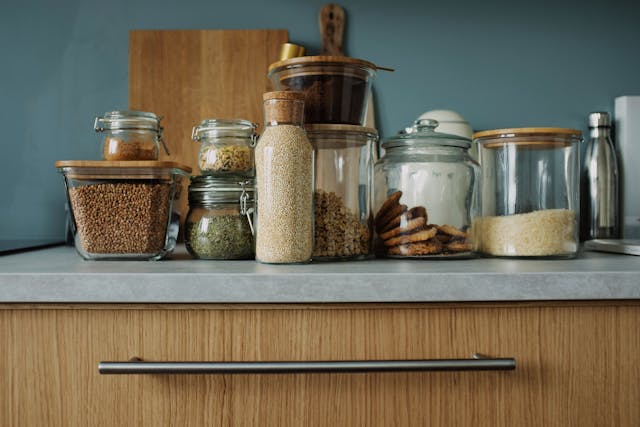
4. Decant into clear containers.
Transferring cereal into a plastic jar might feel like an extra step, but the benefits are massive. Original packaging is bulky, awkward, and usually makes it impossible to see how much of something is actually left.
Switching to clear, airtight containers allows for easy stacking and maximizes vertical space. Plus, it keeps food fresh for much longer. There is nothing worse than reaching for crackers only to find they have gone stale because the bag was not sealed right. Seeing exactly when the rice or flour is low also makes building a grocery list much easier.
5. Utilize the pantry door.
In a small pantry, it is vital to get creative with every square inch. The back of the door is often the most underused real estate in the whole kitchen. Installing an over-the-door rack can hold a surprising amount of inventory.
This is a great spot for smaller items that tend to get lost on big shelves, such as:
Spice jars
Packets of gravy or taco seasoning
Small jars of oils and vinegars
Aluminum foil and plastic wrap boxes
It keeps the small stuff front and center so no one has to dig through baskets to find one specific bottle of hot sauce.
6. Label your heart out.
Even if it seems easy to remember that the white powder in a jar is confectioners sugar and not flour, mistakes happen. Labeling isn't just for the aesthetic; it is a roadmap for everyone in the house.
A fancy label maker isn't required for this. A simple roll of masking tape and a permanent marker works wonders. For those who want to get fancy, pre-made stickers or chalk markers on glass jars look great. Just make sure the labels are clear and easy to read so there is no excuse for putting the lentils in the popcorn bin.
7. Adopt the FIFO method.
In the professional kitchen world, chefs use a system called FIFO, which stands for First In, First Out. It is a simple way of saying the oldest stock should be used first. When coming home from the grocery store with a new jar of peanut butter, do not just shove it in the front.
Move the older jar to the front and put the new one behind it. This ensures that stock is always used up before it reaches an expiration date. It takes an extra five seconds when putting away groceries, but it saves a lot of money in the long run by preventing food waste.
See also: The Giants That Walked: Unpacking the Mystery of Easter Island
Common Questions About Pantry Organization
What is the best way to organize a very deep pantry?
Deep shelves are tricky because things get lost in the back. The best solution is to use pull-out bins. Think of these as drawers that can slide out like a tray. This lets anyone access the stuff in the very back without having to move everything in the front.
How do I keep my pantry organized when I have kids?
The key is accessibility. Create a kid-friendly snack zone on a lower shelf that they can reach. Use open baskets instead of containers with lids for their snacks so it is easy for them to grab what they need and, hopefully, put things back where they belong.
Are expensive containers really worth the investment?
There is no need to spend a fortune. While high-end airtight containers are great for keeping things fresh, reusing glass jars from pasta sauce or pickles works well too. The most important thing is that the containers are clear and seal well enough to keep pests and moisture out.
How often should I be decluttering my pantry?
A quick reset once a week before going grocery shopping is ideal. It helps identify what is already on hand so double purchases are avoided. Then, a deeper dive every three to six months to check for expired items and wipe down the shelves keeps things fresh.
How can I organize spices if they aren't in the pantry?
If spices are kept in a cabinet or drawer, use tiered risers or a drawer insert that angles the jars. This allows for a clear view of the labels in the back row without moving the front row. Consistency in jar size also helps them fit together better.
What should I do with bulk items that don't fit in my containers?
When buying in bulk, keep a backstock area on a higher shelf or in a different cabinet. Refill the everyday containers from the bulk bags as needed. This keeps the main pantry area from feeling overcrowded while still allowing for the savings associated with buying large quantities.
How do I stop my pantry from smelling musty?
Good airflow is essential. Do not overstuff shelves to the point where air cannot circulate. Keeping a small box of baking soda in the corner to absorb odors works just like it does in the fridge. Ensuring everything is in airtight containers also prevents smells from lingering.
What is the most common mistake people make when organizing?
The biggest mistake is buying containers before measuring the space or knowing what needs to be stored. Always declutter and categorize first. Measure the shelf height and depth before purchasing bins. Otherwise, the result is a collection of cute containers that do not actually fit.
See also: 7 Tips to Arrange Furniture in a Small Living Room
Explore
Welcome to Stay Curious, your home for free online calculators and blogs that make you stop and think. Here, questions never get old and answers are always a little unexpected.
We dig into the weird and wonderful, challenge the obvious, and cover topics that make you think, "Why didn't I know this sooner?" From quirky facts to deep dives into everyday mysteries, we are all about satisfying that itch for knowledge you didn't know you had.
So go ahead, stay curious. We promise it'll be worth your while. Or, you know, not. ;)
Contribute
Learn
ask.staycurious@gmail.com
© 2025. All rights reserved.
We welcome guest posts on business, tech, travel, finance, lifestyle, career, relocation, and home improvement. Submissions must be original, unpublished (online), at least 800 words, and written in English.
Ready to contribute? Contact us with your ideas!