
12 Activities For 0–5 Year Olds For Technological And Investigative Play
Try these activities for 0–5 year olds for technological and investigative play that build curiosity, problem-solving skills, and early STEM learning through simple hands-on fun.
EDUCATION
3/18/20269 min read
12 Hands-On STEM Activities For 0–5 Year Olds
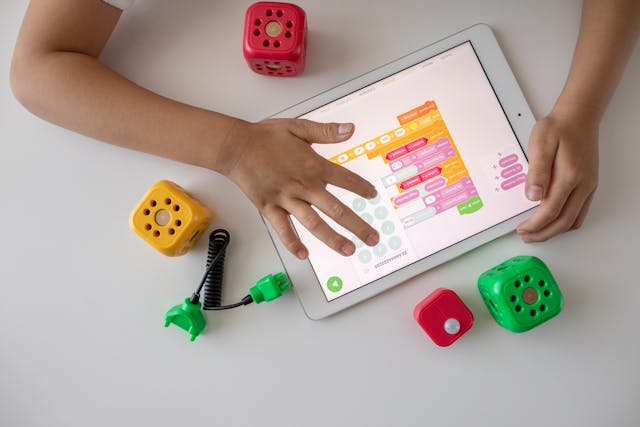
Early childhood is a fascinating whirlwind. One minute you are marveling at a newborn’s grip, and the next, you are trying to explain why the tablet won’t work if it is submerged in juice. If you have felt that slight pang of wondering if you are doing enough or if there is too much screen time, you are definitely not alone. The digital world moves fast, and as parents or educators, we want our kids to be more than passive consumers of content. We want them to be little explorers who understand how things work.
That said, the sweet spot for kids aged 0–5 doesn't stop at digital devices. In early childhood education, technology actually refers to any tool used to solve a problem. This includes safety scissors or a magnifying glass. When we combine this with investigative play, we give them a scientist’s toolkit to poke, prod, and ponder the world.
Research backs up why this is so important. According to some studies, a child’s brain forms over one million new neural connections every single second during these early years. By age five, the brain has already reached about 90% of its adult size. This is a massive window of opportunity to build problem-solving muscles.
Research also shows that early exposure to STEM-style activities supports cognitive development, problem-solving, and language skills. A study published in the European Early Childhood Education Research Journal found that structured STEM activities significantly improved problem-solving abilities in preschool children. At the same time, experts warn that passive screen use can crowd out these essential learning experiences, with toddlers who spend more time on screens showing lower vocabulary scores.
The takeaway is simple. Young children learn best by doing, not just watching.
So if you’re looking for ways to build curiosity, confidence, and early tech thinking without turning your home into a classroom, these activities will help.
See also: Need a Sign to Travel? These 100 Wanderlust Quotes Are It
1. Build towers and bridges.
Give your child blocks, boxes, or even plastic containers and let them build freely. This is one of the simplest forms of engineering play, yet it teaches a lot:
Balance and structure
Cause and effect
Problem-solving when things fall apart
Try this:
Ask “how can we make it taller?”.
Add challenges like building a bridge between two chairs.
Learning outcomes
Understand basic engineering concepts like stability and balance
Develop persistence through trial and error.
Build spatial awareness and early design thinking.
2. Hunt for technology in the wild.
The world is filled with low-tech masterpieces. To a three-year-old, a stapler or a spray bottle is basically magic. You can turn a boring afternoon into a high-stakes scavenger hunt by looking for tools around the house or garden.
Grab a clipboard and walk through the kitchen.
Identify things that help us do work: a whisk, a salad spinner, or a garlic press.
Discuss what would happen if we did not have that tool and how we would mash the potatoes.
Learning outcomes
Identify human-made tools as functional technology.
Understand how inventions simplify daily tasks..
Develop observational skills through environmental scanning.
See also: How to Get to Pag from Italy: A Complete Travel Guide
3. Experiment with sink or float.
Water play is the ultimate laboratory for 0–5 year olds. It is sensory, messy, and deeply educational.
Fill a large tub and gather a mystery bag of items: a cork, a heavy rock, a plastic spoon, and a metal coin.
Before dropping them in, ask for their prediction.
Encourage them to try and make a sinker float by putting the coin on a plastic lid like a boat.
A report from the National Literacy Trust highlights that play-based experimentation helps children embed deeper learning through repetition and trial-and-error.
Learning outcomes
Understand that materials behave differently in water.
Grasp the foundational concepts of density and buoyancy.
Learn through the scientific method of repeated testing.
Understand variable manipulation by altering object surfaces.
Build early scientific reasoning and curiosity.
See also: How Innovations in Wearable Tech Are Changing Lives
4. Rescue frozen toys from the ice.
This is a classic chemistry and physics lesson. Freeze some small plastic animals or colorful blocks in a large container of water overnight.
Provide de-icing tools: warm water in a dropper, a spray bottle, or a blunt wooden hammer for older toddlers.
Ask them to predict which tool will work the fastest.
Observe how the ice changes state from solid to liquid as they work.
Learning outcomes
Practise hypothesis testing and predictive reasoning.
Observe phase changes in matter first-hand.
Enhance fine motor control through varied tool manipulation.
5. Build a light box for shadow play.
You can DIY a light table by putting battery-operated fairy lights or a flashlight inside a clear plastic storage bin and topping it with a thin sheet of white paper.
Give them translucent objects like colorful plastic tiles, leaves, or even slices of citrus fruit.
Let them layer the objects to see how colors blend.
Use the light to create shadow stories on a nearby wall using their hands or cut-out puppets.
Learning outcomes
Explore artificial light as a technological resource.
Understand scientific principles like opacity, transparency, and color theory.
Apply visual data to storytelling creatively.
See also: Everything You Should Order from the Old Spaghetti Factory Menu
6. Map the neighborhood with a digital camera.
Handing a preschooler a durable kid-safe camera or an old phone in a chunky case changes their perspective.
Go on a texture walk and ask them to take photos of things that look bumpy, smooth, or fuzzy.
Back at home, scroll through the photos together to introduce the idea of digital documentation.
Print a few photos and help them glue them onto a map of your street.
Learning outcomes
Utilize digital hardware for data capture and evidence collection.
Translate 3D physical environments into 2D records.
Introduce the concept of digital archiving and review.
7. Create a deconstruction junction for old tech.
If you have an old keyboard, a defunct calculator, or a remote control that no longer works, do not toss it yet. For children closer to five, taking things apart is the ultimate thrill.
Provide a small screwdriver with close supervision and let them see what is inside.
Talk about the buttons, the circuit boards, and the wires.
Encourage them to sort the parts they find by color or size.
Learning outcomes
Comprehed internal mechanics and hidden systems.
Refine classification skills based on physical components.
Lean how to apply tool-use safety and precision.
See also: How to Make Money on Pinterest
8. Code a human robot.
You do not need a screen to teach the fundamentals of coding. Coding is just a sequence of instructions.
You are the robot and your child is the programmer.
They give you specific commands to get you from the couch to the fridge: two steps forward, turn left, one giant hop.
If they forget a step and you walk into a wall, they have to debug the code and try again.
Learning outcomes
Learn the ropes of logic and directional sequencing.
Develop computational thinking without the need for hardware.
Solve problems through iterative debugging and testing.
9. Grow a windowsill garden with data.
Technology in the garden involves measurement and observation. Grab some quick-growing seeds like beans or cress.
Use a ruler or hand-spans to measure how high the plant grows each day.
Use a tablet or phone to take a time-lapse photo once a day at the same time.
After a week, flip through the photos quickly to see the plant grow.
According to 2024 educational data, children who participate in active technology use like documenting growth develop better emotional regulation and patience than those who engage in passive screen time.
Learning outcomes
Apply quantitative measurement and data tracking.
Use digital photography to observe biological progression.
Build patience and long-term observational consistency.
10. Record and remix household sounds.
Most tablets and phones have a simple voice memo or garage-band style app. Sound is a wonderful, invisible thing to investigate.
Go around the house and record mystery sounds: the toilet flushing, the microwave beeping, or the cat meowing.
Play them back and see if they can guess what they are.
Use a simple app to change the pitch to make their voice sound like a giant or a tiny mouse.
Learning outcomes
Understand how technology captures and stores invisible sensory data.
Learn how to manipulate digital information to change perception.
Strengthen auditory discrimination and focus.
See also: How to Organize Your Kitchen Pantry
11. Design a cardboard marble run.
Engineering is designing under constraints. Give your child a stack of toilet paper rolls, some masking tape, and a marble.
Tape the tubes to a wall or the back of a door to create a track.
Investigate if the marble goes faster if the tube is steeper.
Determine what happens if you put something fuzzy like a cotton ball inside the tube to introduce friction.
Learning outcomes
Apply basic physics concepts like gravity and friction.
Get hand-on wxperience with the engineering design cycle: build, test, and improve.
Learn spatial reasoning and structural planning.
12. Build a DIY investigative kit with hardware store finds.
You can create a professional-grade exploration station without a high price tag. A trip to the local hardware store offers a wealth of sensory and technological tools for a few dollars.
Purchase a set of PVC pipe connectors and elbows for an indestructible water or marble run.
Grab a pack of large metal washers or nuts for sorting by size and weight.
Pick up a sample piece of artificial turf or sandpaper to explore different textures and friction levels.
Buy a roll of colorful electrical tape for marking paths and creating human coding grids on the floor.
Find a small, clear plastic organizer with drawers to help children practice sorting their found treasures.
Get a set of measuring tapes or wooden rulers for height and length investigations.
Choose a few heavy-duty carabiners to practice mechanical fastening and grip strength.
Pick up a manual spray bottle for fine motor work and water-based experiments.
Grab a set of paintbrushes of varying widths to use as cleaning tools for a mock fossil dig.
Secure a durable plastic bucket to act as the portable command center for all their investigative tools.
Learning outcomes
Get access to industrial materials that promote spatial reasoning.
Encourage mechanical curiosity and technical resourcefulness.
Apply STEM principles using real-world objects.
See also: The Ultimate Moving Into a New Apartment Checklist (2026 Guide)
FAQs
1. What is technological play for toddlers?
Technological play does not always mean screens. It includes activities that involve problem-solving, cause-and-effect thinking, and exploring how things work. Simple tools, building materials, and experiments all count as early technology learning experiences.
2. How early can children start investigative play?
Children begin exploring their environment from infancy. Even babies experiment through touch and movement. By age one, they actively test cause and effect, making it a great time to introduce simple investigative activities.
3. Is any screen time okay for children under two?
Current guidelines generally suggest avoiding screen time for those under 18 months, except for video chatting. Between 18 and 24 months, if you choose to introduce digital media, it is best to watch high-quality programming together so you can explain what they are seeing and make it interactive.
4. Are screens necessary for early tech learning?
No, they are not essential. Hands-on activities are more effective for early development. Research shows excessive screen time may limit language growth, so active play should be the priority in early years .
5. How long should these activities last?
For toddlers and preschoolers, 10 to 20 minutes is usually enough. Follow your child’s attention span. If they stay engaged longer, that’s great, but short and consistent sessions work best.
6. How does playing with a whisk count as technology?
In an educational context, technology is anything created to solve a human problem. A whisk is a tool that solves the problem of mixing liquids efficiently. Helping a child see tools this way builds a foundational understanding of engineering and human ingenuity across history.
7. Can investigative play help with school readiness?
Investigative play builds executive function skills such as working memory and flexible thinking. Research indicates that early math and inquiry skills are stronger predictors of later academic success than early reading levels. It focuses on the process of learning and discovery.
8. What if my child gets frustrated when an experiment fails?
In the world of STEM, failure is just data. Encourage them by noting that the tower fell because the base was not wide enough and ask what they should try next. This approach builds resilience and a growth mindset during early development.
9. Do I need to buy expensive STEM kits for my toddler?
Most of the best investigative play happens with loose parts like cardboard boxes, water, dirt, and kitchen utensils. The technical value lies in the process of using these items to explore a question or complete a task rather than the price tag.
10. How do I balance tech play with physical activity?
The best activities blend both worlds. For example, using a tablet to identify birds in the backyard requires running around and observing nature. Aim for technology to be a supplement to their physical world rather than a replacement for outdoor movement.
11. What is inquiry based learning in simple terms?
This involves learning by doing and asking questions. Instead of telling a child that ice melts when it gets warm, you let them hold an ice cube and ask where the water came from. It places the child in the driver's seat of curiosity.
12. How can I make digital play more social?
The key is co-viewing or co-playing. Instead of the child sitting alone, sit with them. Ask questions about the game, narrate what is happening, and connect the digital content to the real world like comparing a digital cow to one at a farm.
Explore
Welcome to Stay Curious, your home for free online calculators and blogs that make you stop and think. Here, questions never get old and answers are always a little unexpected.
We dig into the weird and wonderful, challenge the obvious, and cover topics that make you think, "Why didn't I know this sooner?" From quirky facts to deep dives into everyday mysteries, we are all about satisfying that itch for knowledge you didn't know you had.
So go ahead, stay curious. We promise it'll be worth your while. Or, you know, not. ;)
Contribute
Learn
ask.staycurious@gmail.com
© 2025. All rights reserved.
We welcome guest posts on business, tech, travel, finance, lifestyle, career, relocation, and home improvement. Submissions must be original, unpublished (online), at least 800 words, and written in English.
Ready to contribute? Contact us with your ideas!