
Mary Berry's Lemon Drizzle Cake Recipe
From sponge texture to the perfect drizzle, this post explains how Mary Berry's Lemon Drizzle Cake stays moist, bright, and foolproof.
LIFESTYLE
1/15/20264 min read
Mary Berry’s Lemon Drizzle Cake: The Classic That Never Lets You Down
Lemon drizzle cake is one of those bakes that works for almost any occasion. It is simple, familiar, and easy to get right, yet it never feels boring. The balance of soft sponge, sharp lemon flavour, and a sugary topping is what keeps people coming back to it. Among the many versions out there, Mary Berry’s lemon drizzle cake stands out for being reliable, unfussy, and consistently good. The ingredients are basic, the method is clear, and the end result delivers exactly what a lemon cake should taste like.
This is the kind of recipe that gets passed around, scribbled into notebooks, and baked again and again. It does not rely on fancy techniques or unusual ingredients. Instead, it focuses on doing the basics properly, which is why it has stayed popular for so long.
What Makes Mary Berry’s Lemon Drizzle Cake So Good?
A good lemon drizzle cake comes down to a few simple things done well. First, the sponge needs to be light but still moist. Second, the lemon flavour should taste fresh and sharp, not artificial or overpowering. Finally, the drizzle needs to soak into the cake while leaving a slightly crunchy top.
Mary Berry’s approach hits all three. The sponge uses classic ratios that give a soft, even crumb. The lemon flavour comes mainly from fresh zest and juice, which keeps it bright and clean. The topping uses granulated sugar rather than icing sugar, which is what gives that signature crackly finish once the cake cools.
Ingredients You’ll Need
One of the reasons this cake is so popular is that it does not ask for anything unusual. Everything is easy to find and probably already in the kitchen.
For the cake
Caster sugar
Self-raising flour
Softened butter
Eggs
Lemon zest
Baking powder
The loaf-style version commonly uses equal weights of butter, sugar, and self-raising flour, along with three eggs and the zest of one lemon. This balance keeps the sponge tender without making it heavy.
For the lemon drizzle
Granulated sugar
Fresh lemon juice
Granulated sugar is important here. It does not dissolve completely, which is what creates that lightly crunchy top layer once the drizzle sets.
How to Make It Without Overcomplicating Things
Prepare the tin.
Grease the tin well and line it with baking paper. Lemon drizzle cake can stick because of the sugary topping, so lining the tin makes removing it much easier later.
Cream butter and sugar.
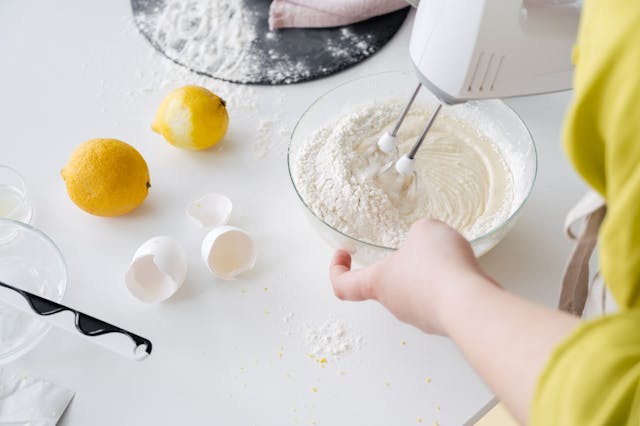
Beat the butter and caster sugar together until the mixture looks pale and lighter in texture. This step helps trap air, which gives the cake a softer crumb once baked.
Add the eggs slowly.
Add the eggs a little at a time, mixing well between each addition. This helps keep the mixture smooth. If it looks slightly split, it usually fixes itself once the flour is added.
Fold in the dry ingredients and lemon zest.
Gently fold in the self-raising flour, baking powder, and lemon zest. Mix just until combined. Overmixing can make the cake dense, which is the last thing you want here.
Bake until just done.
Bake until the cake is golden and a skewer inserted into the centre comes out clean or with a few soft crumbs. Avoid opening the oven door too early, as that can cause the cake to sink.
Getting the Drizzle Right
The drizzle is what turns a simple lemon cake into a lemon drizzle cake, and timing matters. It should go on while the cake is still warm, not hot and not fully cool.
Prick the surface of the cake all over with a skewer. Slowly spoon or brush the lemon juice and granulated sugar mixture over the top. Some of it will sink into the sponge, keeping it moist, while the rest stays on the surface and sets as the cake cools.
This is where that classic contrast comes from. Soft cake underneath, slightly crisp topping on top.
Common Problems And Easy Fixes
Just in case.....
The cake feels dry.
This usually means it baked for too long. Start checking a little earlier next time. Also make sure the drizzle is added while the cake is still warm so it can soak in properly.
The topping turns sticky.
If the sugar dissolves completely, the top can stay sticky rather than crunchy. Using granulated sugar and not overmixing the drizzle helps prevent this.
The middle sank.
This can happen if the oven door is opened too early or if the tin is too small for the mixture. Make sure the oven is fully preheated and let the cake set before checking it.
How to Serve Lemon Drizzle Cake
This cake does not need much dressing up. It works perfectly on its own with a cup of tea or coffee. For something a little extra, it pairs well with lightly whipped cream or a handful of fresh berries on the side.
It also slices cleanly, which makes it a good option for sharing, packing up, or taking along to gatherings.
Storing and Freezing
Once completely cool, store the cake in an airtight container to keep it moist. It will stay fresh for several days. Lemon drizzle cake also freezes well. Wrap individual slices tightly, freeze, and defrost at room temperature when needed.
Wrapping Up
Mary Berry’s lemon drizzle cake has lasted because it does exactly what it promises. It is simple, dependable, and full of flavour without trying too hard. The sponge stays soft, the lemon tastes fresh, and the drizzle adds just enough sweetness and texture. For a classic cake that rarely disappoints, this one continues to earn its place in the kitchen for obvious reasons.
Explore
Welcome to Stay Curious, your home for free online calculators and blogs that make you stop and think. Here, questions never get old and answers are always a little unexpected.
We dig into the weird and wonderful, challenge the obvious, and cover topics that make you think, "Why didn't I know this sooner?" From quirky facts to deep dives into everyday mysteries, we are all about satisfying that itch for knowledge you didn't know you had.
So go ahead, stay curious. We promise it'll be worth your while. Or, you know, not. ;)
Contribute
Learn
ask.staycurious@gmail.com
© 2025. All rights reserved.
We welcome guest posts on business, tech, travel, finance, lifestyle, career, relocation, and home improvement. Submissions must be original, unpublished (online), at least 800 words, and written in English.
Ready to contribute? Contact us with your ideas!