
How to Make the Most of Bus Tours of Ireland
From food to must-see stops, bus tours of Ireland cover far more than you think. Read this before you book anything.
TRAVEL
Hana Shaw
5/15/20267 min read
A First-Timer’s Honest Guide to Seeing the Emerald Isle by Coach
I'll be honest with you.
I was skeptical. Bus tours always seemed like the kind of thing you'd do with your grandparents, shuffling from one monument to the next with a laminated itinerary and a packed lunch.
Then I actually did one across Ireland, and I came home a convert.
Done right, a bus tour through this country is one of the most rewarding ways to see it. You cover ground that would take weeks to plan independently, you skip the white-knuckle experience of driving on the left along cliff edges, and you meet people who become proper friends by day three.
But there's still a big difference between a good trip and a forgettable one. A lot of that comes down to the choices you make before you even board the coach.
Here's what I've learned.
Why a bus tour in the first place?
This is a fair question, and it deserves a straight answer. Ireland is a small country (about the size of the state of Indiana) but the things worth seeing are scattered across its coastlines, mountains, and country roads in a way that makes independent travel genuinely complicated. Renting a car means driving on the left, navigating single-track roads along cliff edges, and spending a good chunk of your holiday researching logistics rather than actually experiencing the place.
A bus tour removes all of that friction. Your accommodation is booked, your route is planned, and someone who actually knows the country is sitting at the front explaining what you're looking at. For first-time visitors especially, this matters enormously. Ireland's history (the famine, the monasteries, the mythology woven into the landscape) is far richer when someone who grew up with it tells you the stories.
There's also the social dimension. Solo travellers in particular find bus tours a reliable way to meet people. By day two, the group has usually found its rhythm, and by day four, you're swapping recommendations and making plans to revisit together.
See also: It's Okay to Give Up on Your Dreams
When is the best time to go?
May and June are, in my opinion, the sweet spot. The days are long. Ireland sits far enough north that you get light until nearly 10pm in late June, the crowds haven't reached peak summer levels, and the countryside is the kind of green that makes you understand why they named it the Emerald Isle. The Cliffs of Moher in June, without the shoulder-to-shoulder August crowds, is a completely different experience.
September is another strong option, particularly for the west coast, where the Atlantic light in early autumn is spectacular. In May 2026, most major operators (including Paddywagon Tours, CIE Tours, and Rabbie's) have resumed their full-season schedules, so you have a healthy range of itineraries to choose from.
Avoid August if you can. Not because it's bad, but because places like the Ring of Kerry and the Dingle Peninsula get genuinely busy, and some of the joy of those roads is having them feel wild and remote.
See also: How to Plan a Travel Budget
How do I pick the right tour company?
This matters more than people realise. The difference between operators is not just price; it's pace, group size, and the kind of traveller they attract.
Budget backpacker tours like Paddywagon and Shamrocker are loose, sociable, and geared toward people in their twenties who want to explore hard and sleep later. Groups are bigger, stops can feel rushed, and the energy on the bus is half the point. If that sounds like you, these tours are genuinely fun.
Mid-range operators like Rabbie's (who run smaller sixteen-seat coaches) and Go Ireland offer a more relaxed pace with smaller groups (usually under twenty people) and guides who tend to have real depth of knowledge. These sit in the sweet spot for most travellers.
Premium operators like CIE Tours and Insight Vacations cater to a more comfortable, older demographic. Accommodation is better, luggage is handled, and the pace allows for longer stops. If you're travelling with someone who struggles with long walks or early mornings, this end of the market is worth the extra spend.
See also: How Much Money Is Good to Save Every Month?
What should I actually pack?
Ireland's weather is famously unpredictable, but not in the way most people think. It rarely gets very cold or very hot; it just shifts between those states several times in the same afternoon. What you need is layers and waterproofing, not necessarily warmth.
A good waterproof jacket is non-negotiable. Not a thin rain mac, but an actual jacket with a hood that stays on in Atlantic wind. Comfortable walking shoes that you don't mind getting muddy are equally important. Some of the best stops (the Burren, the Wicklow Mountains, the Gap of Dunloe) involve a bit of uneven ground.
Keep your day bag light. You'll be getting on and off the coach repeatedly, and a heavy rucksack gets old fast. A small crossbody or a packable daypack works well. Power banks are genuinely useful, as long driving days drain your phone quickly if you're using it for photos and maps.
See also: How Much Should I Have in My Emergency Fund?
What are the must-see places on any decent itinerary?
A solid week-long tour should give you the Cliffs of Moher and the Burren in County Clare, the Ring of Kerry, the Giant's Causeway in County Antrim, and at least one night in Galway, a city that rewards slow walking and genuine curiosity.
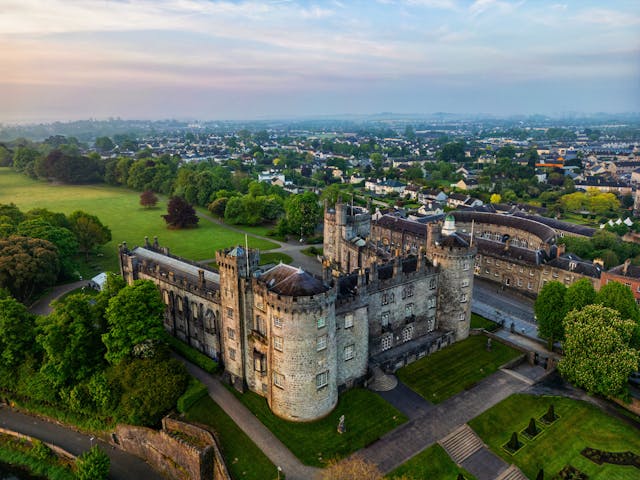
Kilkenny is consistently underrated. It's compact, walkable, has a genuinely impressive medieval castle, and the food scene there has improved enormously in recent years. If your tour passes through and gives you a free afternoon, use it well.
The Skellig Ring (a quieter alternative to the main Ring of Kerry, hugging the coast near Portmagee) is worth asking your guide about if there's any flexibility in the route. It's less travelled and, in my view, more dramatic.
The Wicklow Mountains, just south of Dublin, often get overlooked in favour of the west. Glendalough, a sixth-century monastic settlement tucked into a glacial valley, is one of the most peaceful and visually striking places I've visited anywhere in Europe.
The Causeway Coastal Route in the north is another highlight, particularly the stretch between Ballycastle and Ballintoy, where the road clings to the cliff above the sea and every bend opens onto a new view.
What local foods should I try?
Irish food has changed considerably in the past decade, and the country now has a genuinely strong food culture built around fresh, local produce. Here's what to look for, keeping halal and dietary-friendly options in mind.
Irish seafood is the undisputed star. Ireland's cold Atlantic waters produce exceptional fish and shellfish. Look for fresh Atlantic salmon, smoked salmon on brown bread, seafood chowder made with cream and whatever came in that morning, and Galway Bay oysters if they're in season. The west coast towns (Dingle, Killybegs, and Kinvara) are where seafood is taken most seriously.
Irish brown bread and soda bread are staples worth seeking out. They're made fresh daily in most traditional tea rooms and bakeries, and they taste completely different from what you'd find in a supermarket. Paired with Irish butter (which has a higher fat content than most European varieties and a rich, slightly grassy flavour) it's one of the simplest and best things you'll eat.
Dairy products are a genuine point of pride here. Irish cheese has become increasingly sophisticated, with farmhouse producers across Munster and Connacht producing award-winning varieties. Keep an eye out for Cashel Blue from Tipperary and Gubbeen from West Cork at deli counters and food markets.
Traditional Irish stew, when made well, is hearty and satisfying: slow-cooked lamb or beef with root vegetables. Ask your guide or hotel which local restaurants do it properly, because quality varies widely.
Soda bread scones and cream tea are common across the country, particularly in the kind of old stone tea rooms you'll find near heritage sites. A pot of tea and a warm scone with jam is one of Ireland's most reliable small pleasures.
For travellers with dietary requirements, Irish towns have become noticeably more accommodating in recent years. Most restaurants now clearly mark vegetarian and vegan options, and larger towns like Galway, Cork, and Kilkenny have dedicated vegetarian cafés and farmers' markets where the food is worth building your schedule around.
See also: How Much to Budget for Groceries
Will I get enough free time to explore on my own?
This varies a lot by operator and itinerary, so read the small print before booking. Most reputable tours now build in at least some free time at major stops, usually an hour or two in towns like Killarney, Galway, or Kilkenny. That's enough to wander, have a coffee, and explore without feeling herded.
Where tours often fall short is at natural landmarks. The Cliffs of Moher deserves more time than some tours allow. If your itinerary gives you forty-five minutes there, accept it, but know you'll probably want to come back independently one day.
My advice: on free-time stops, skip the souvenir shops on the main street and walk one block back. Every Irish town has a slower, quieter version of itself just off the tourist drag, and that's usually where the better food, the older buildings, and the more interesting conversations are.
How do I get the most out of the guide?
This is the most underused resource on any bus tour. A good Irish guide is not just someone reading from a script; they're usually locals with genuine stories, strong opinions about history, and solid knowledge of where to eat and what's worth your time. Talk to them.
Ask about family history if you have Irish roots. Guides are often remarkably good at pointing you toward county archives, local graveyards, or parish records you wouldn't find on your own. Ask for restaurant recommendations in each town. Ask what they think is overhyped and what most tourists miss.
The front seats of the coach are not just for people who get carsick. Sitting up front means you catch more of the commentary, see more of the road ahead, and often end up in natural conversation with the guide during quieter stretches. Some of the best things I learned about Ireland came from those in-between moments on the road, not from the scheduled stops.
TL; DR: Ireland is a small country, but it packs in more history, scenery, and character than places twice its size. A bus tour is simply one of the best ways to see it properly, especially for the first time. Someone else handles the driving, the planning, and the navigation, so all you have to do is just look out the window and take it all in.
I did exactly that, and I'm already planning to go back.
Author Bio
Hana writes travel journals and destination guides for people who love nature, scenic routes, and peaceful escapes. She focuses on approachable itineraries and real-world tips.
Explore
Welcome to Stay Curious, your home for free online calculators and blogs that make you stop and think. Here, questions never get old and answers are always a little unexpected.
We dig into the weird and wonderful, challenge the obvious, and cover topics that make you think, "Why didn't I know this sooner?" From quirky facts to deep dives into everyday mysteries, we are all about satisfying that itch for knowledge you didn't know you had.
So go ahead, stay curious. We promise it'll be worth your while. Or, you know, not. ;)
Contribute
Learn
ask.staycurious@gmail.com
© 2025. All rights reserved.
We welcome guest posts on business, tech, travel, finance, lifestyle, career, relocation, and home improvement. Submissions must be original, unpublished (online), at least 800 words, and written in English.
Ready to contribute? Contact us with your ideas!